


Cart
0
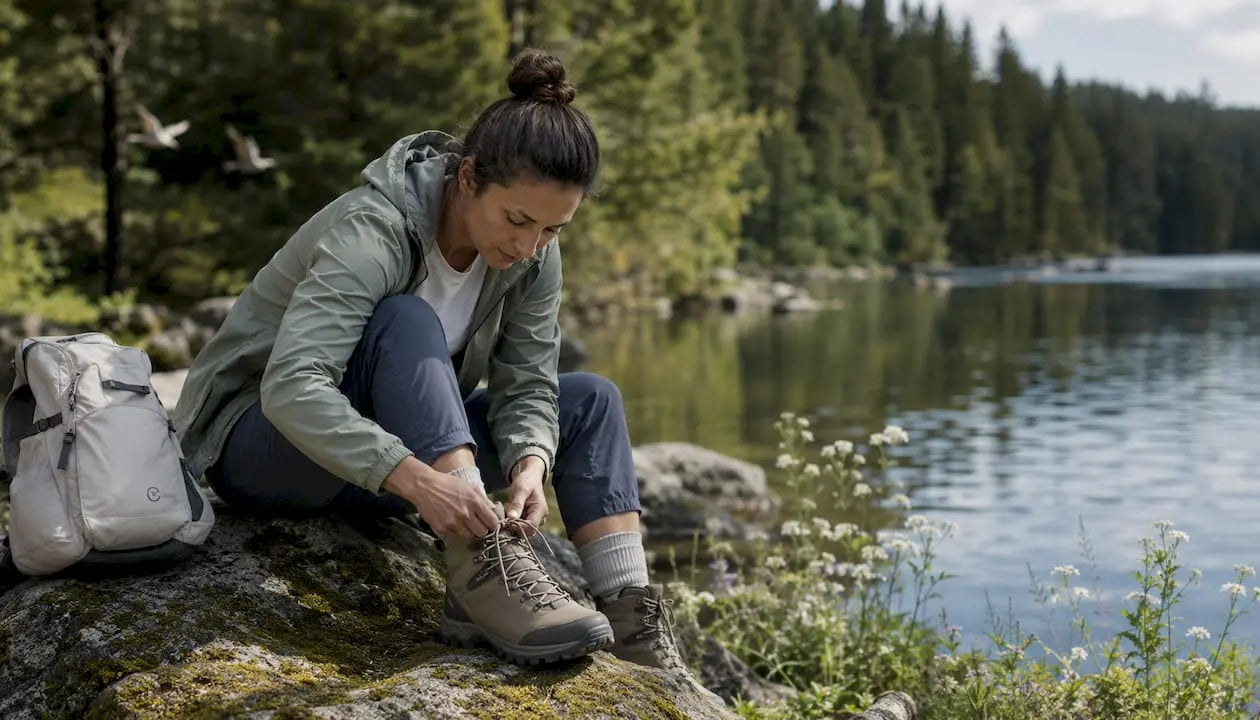
TL;DR:
- The best hiking boots combine support, waterproofing, and comfort, tailored to terrain and load. Mid-range models offer the best value, balancing durability and performance for most hikers. Proper fit, support, and the right choice of waterproof or breathable materials are essential for trail success.
The top picks include the Salomon X Ultra 5 Mid GTX (best overall), Merrell Moab 3 Mid Waterproof (best value), Salomon Quest 5 GTX (best support/backpacking), La Sportiva Ultra Raptor 3 Mid GTX (best lightweight), and the Topo Athletic Trailventure 2 WP (best for wide feet). These five cover common hiker needs, and the rest of this guide covers additional models tested across varied terrain.
- Salomon X Ultra 5 Mid GTX — Best overall; balanced weight, grip, and out-of-the-box comfort at a mid-range price. Gore-Tex waterproofing.
- Merrell Moab 3 Mid Waterproof — Best value; near-zero break-in, breathable mesh panels, and a price point well under most competitors.
- Salomon Quest 5 GTX — Best support; high-cut construction built for heavy packs and multi-day routes. Gore-Tex lined.
- La Sportiva Ultra Raptor 3 Mid GTX — Best lightweight; trail-runner agility in a mid-height boot, ideal for fast hikers on technical terrain.
- Topo Athletic Trailventure 2 WP — Best for wide feet; roomy toe box, reliable waterproofing, and cushioned comfort for hikers who need extra forefoot space.
Multiple models were evaluated across day hikes, overnight trips, and technical terrain, covering various environments from muddy Pacific Northwest trails to dry desert canyons. The picks below reflect that range.
Table of Contents
- How do the top hiking boots compare at a glance?
- Detailed reviews: which boot actually works on trail?
- How do you choose the right hiking boot for your needs?
- Should you choose waterproof or breathable hiking boots?
- How do you get the right fit and break in new boots?
- How were these boots tested and scored?
- What’s the final verdict by use case?
- Common hiking boot problems and how to fix them
- Key Takeaways
- Why these picks hold up on trail
- Complete your trail look with Cas7m
- Sources and further reading
- FAQ
How do the top hiking boots compare at a glance?
| Boot | Best For | Price Range | Weight (pair, approx.) | Waterproofing | Support | Traction | Durability | Fit Tendency |
|---|---|---|---|---|---|---|---|---|
| Salomon X Ultra 5 Mid GTX | Best overall | $165 | ~2 lbs | Gore-Tex | Medium | Contagrip outsole | Synthetic upper | Neutral/slightly narrow |
| Merrell Moab 3 Mid Waterproof | Best value | $120 | around 2 lbs | M Select DRY membrane | Medium | Vibram TC5+ | Mesh/synthetic | Neutral, roomy toe |
| Salomon Quest 5 GTX | Best support/backpacking | $200 | ~2.6 lbs | Gore-Tex | High | Contagrip outsole | Synthetic/textile | Neutral |
| La Sportiva Ultra Raptor 3 Mid GTX | Best lightweight | $200 | ~1.9 lbs | Gore-Tex | Medium | FriXion XF outsole | Mesh/synthetic | Narrow to neutral |
| HOKA Kaha 3 GTX | Max cushion | — | ~2.4 lbs | Gore-Tex | Medium | Vibram Megagrip | Synthetic | Neutral/wide |
| Topo Athletic Trailventure 2 WP | Wide feet | — | — | Waterproof membrane | Medium | Vibram outsole | Mesh/synthetic | Wide toe box |
| La Sportiva TX Hike Mid Leather GTX | All-weather leather | — | — | Gore-Tex | Medium-High | Vibram Megagrip | Full-grain leather | Neutral |
| Zamberlan 996 Vioz GTX | Max durability | — | ~2.8 lbs | Gore-Tex | High | Vibram Tsavo | Full-grain leather | Neutral/wide |
| Lowa Renegade Evo GTX | Dependable all-rounder | — | — | Gore-Tex | High | Vibram Evo | Nubuck leather | Neutral |
| Altra Olympus 6 Hike Mid GTX | Zero-drop/wide toe | $200 | around 2 lbs | Gore-Tex | Medium | MaxTrac outsole | Synthetic | Wide/zero-drop |
| Danner Mountain 600 Leaf GTX | Heritage durability | $200 | ~2.4 lbs | Gore-Tex | Medium-High | Vibram Fuga | Nubuck leather | Neutral |
| Columbia Crestwood Mid / Newton Ridge Plus II | Budget entry-level | $80 | — | Omni-Tech membrane | Low-Medium | Omni-Grip | Synthetic | Neutral |
| Oboz Bridger Mids | Frequent trail use | — | ~2.4 lbs | BDry membrane | Medium-High | Vibram outsole | Nubuck/synthetic | Neutral |
| Keen Zionics | Wide forefoot comfort | — | — | KEEN.DRY membrane | Medium | Non-marking rubber | Synthetic | Wide toe box |
| Merrell Moab Speed 2 Mid GTX | Speed/grip day hikes | — | ~1.9 lbs | Gore-Tex | Medium | Vibram TC5+ | Mesh/synthetic | Neutral |
| Altra Timp 6 Mid GTX | Fast hikers, roomy fit | $190 | — | Gore-Tex | Medium | MaxTrac outsole | Synthetic | Wide/foot-shaped |
| La Sportiva Nucleo High II GTX | Wet climates | $190 | — | Gore-Tex | Medium | FriXion AT outsole | Mesh/synthetic | Neutral |
| Oboz Sawtooth Ascent | Rugged day hikes | — | — | BDry membrane | Medium-High | Vibram outsole | Nubuck/synthetic | Neutral |
| Salomon X Ultra 360 Mid GTX | Agile day hiking | — | — | Gore-Tex | Medium | Contagrip outsole | Synthetic | Neutral |
| Topo Athletic Ultraventure 4 | Fastpacking/speed | — | — | Waterproof option | Low-Medium | Vibram outsole | Mesh/synthetic | Wide toe box |
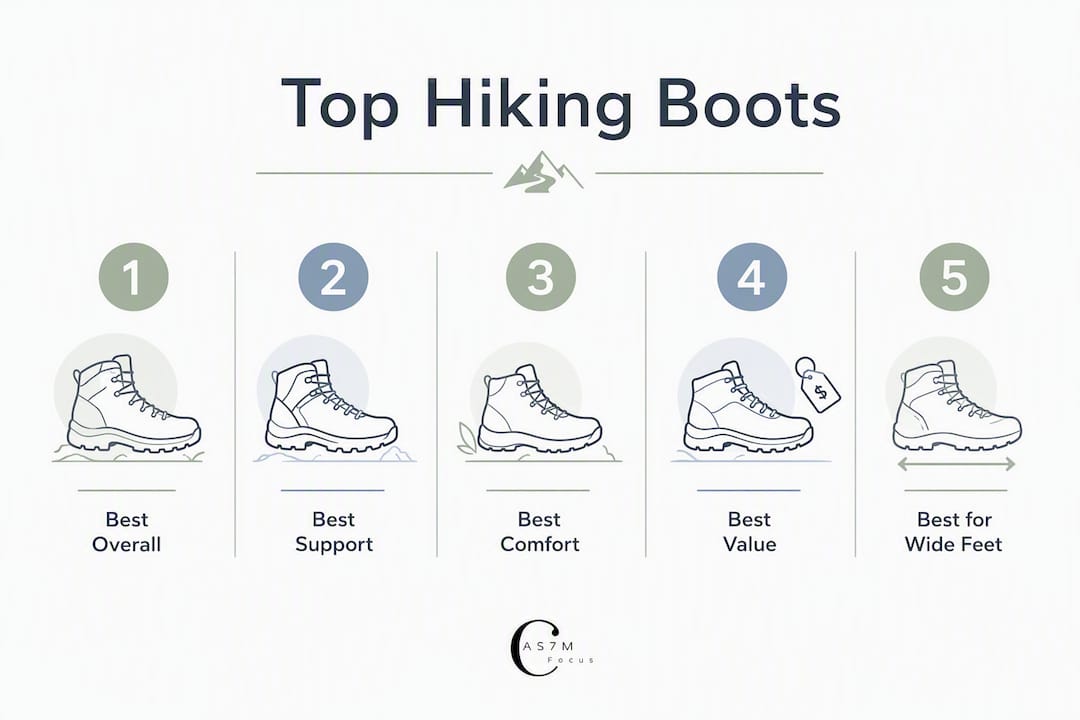
For day hikes on maintained trails, the Weight and Fit columns matter most. For backpacking with a loaded pack, prioritize Support and Durability.
Detailed reviews: which boot actually works on trail?
Salomon X Ultra 5 Mid GTX
The X Ultra 5 is the boot most hikers should buy first. It weighs around 2 lbs per pair, fits comfortably out of the box, and the Contagrip outsole handles both wet rock and dry dirt without drama. Gore-Tex keeps feet dry on stream crossings and light rain. The fit runs slightly narrow through the midfoot, so hikers with wider feet should try before buying or size up half a step. A women’s version is available with a narrower heel and adjusted volume. GearJunkie’s 2026 roundup consistently surfaces the X Ultra line for its balance of low weight, traction, and comfort.
Merrell Moab 3 Mid Waterproof
Few boots at this price point offer as little friction between purchase and first hike. Reviewers highlight near-zero break-in, breathable mesh panels alongside the M Select DRY membrane, and a Vibram TC5+ outsole that grips reliably on packed dirt and gravel. The trade-off: the midsole cushioning is moderate, not plush, and the boot won’t hold up to aggressive off-trail scrambling the way a stiffer leather boot will. Women’s models share the same last with a slightly narrower heel. For casual hikers and beginners, this is the most practical starting point.
Salomon Quest 5 GTX
When the pack weight climbs past 30 lbs, ankle support becomes the priority. The Quest 5 delivers a high-cut construction with a stiff chassis that keeps the ankle stable on uneven ground. Gore-Tex lining handles multi-day wet conditions. The boot is heavier than the X Ultra line, around 2.6 lbs per pair, and that weight is felt on long flat sections. It’s a deliberate trade-off: the extra structure pays off on technical descents with a loaded pack. Fits neutral, and the women’s version adjusts volume without changing the supportive platform.
La Sportiva Ultra Raptor 3 Mid GTX
This is the boot for hikers who move fast and hate feeling slowed down by their footwear. At roughly 1.9 lbs, it’s among the lightest mid-height options tested. The FriXion XF outsole grips technical rock well, and the Gore-Tex lining keeps pace with the boot’s agile character. The fit runs narrow, which suits performance-oriented hikers but can frustrate those with wider forefeet. Modern best-of lists increasingly favor this trail-runner-inspired category, and the Ultra Raptor 3 is one of the cleaner executions of that concept.
HOKA Kaha 3 GTX
The Kaha 3 is built around a plush midsole that reduces impact over long miles, making it a strong choice for hikers whose knees or joints feel the cumulative toll of big days. Vibram Megagrip handles wet and dry surfaces confidently. The boot runs neutral to slightly wide, which works well for hikers who find most boots too snug. Gore-Tex keeps it trail-ready in wet conditions. The cushioning does add weight, around 2.4 lbs, so fast hikers may find it sluggish.
Topo Athletic Trailventure 2 WP
Topo’s signature wide toe box is the main reason to choose this boot. Hikers whose toes get compressed in standard lasts will notice the difference immediately. The waterproof membrane performs well in wet grass and light rain. Cushioning is solid without being excessive, and the Vibram outsole grips reliably. The Ultraventure 4, Topo’s trail-running sibling, suits fastpackers who want the same roomy fit with less structure and more speed.
La Sportiva TX Hike Mid Leather GTX
A full-grain leather upper, Gore-Tex lining, and Vibram Megagrip outsole make this an all-conditions workhorse. Switchback Travel’s 2026 testing rated it best-in-class for comfort and trail performance. The leather construction requires periodic cleaning and re-waterproofing treatment to retain performance, but the payoff is a boot that lasts years longer than most synthetic options. Fits neutral, with a supportive heel cup that locks the foot in place on technical terrain.
Zamberlan 996 Vioz GTX
For hikers who spend serious time off-trail on demanding terrain, the Vioz GTX is built to outlast most of the competition. The near-seamless full-grain leather upper resists abrasion, and the Vibram Tsavo outsole handles loose rock and mud. At 2.8 lbs, it’s not a speed boot. Break-in takes longer than synthetic options, but the result is a boot that molds to the foot over time. Premium leather boots need periodic re-waterproofing treatments to retain their protection, and the Vioz is no exception.
Lowa Renegade Evo GTX
The Renegade line has earned its reputation across multiple generations of hikers. The Evo update refines the fit and outsole without abandoning what made the original work: a supportive platform, nubuck leather upper, and Gore-Tex lining that handles multi-day conditions. It fits neutral and suits hikers who want a dependable all-rounder for long miles without committing to a full backpacking boot.
Altra Olympus 6 Hike Mid GTX
Zero-drop means the heel and forefoot sit at the same height, which suits hikers who prefer a natural foot posture. The Olympus 6 pairs that platform with substantial cushioning and a wide toe box, making it one of the more distinctive options on this list. Gore-Tex keeps it waterproof. The zero-drop geometry takes adjustment if you’re coming from a traditional heeled boot, so a break-in period is worth building in.
Danner Mountain 600 Leaf GTX
Heritage construction with a modern Vibram Fuga outsole. The nubuck leather upper ages well and the Gore-Tex lining handles mixed conditions reliably. It’s a boot for hikers who value longevity and don’t mind the maintenance that leather requires. Fits neutral with a supportive structure that works for day hikes and light overnight trips.
Columbia Crestwood Mid / Newton Ridge Plus II Waterproof
Columbia’s entry-level options cover the basics: Omni-Tech waterproofing, Omni-Grip outsole, and a price point that makes them accessible for weekend hikers who don’t need technical performance. The support and durability are modest compared to mid-range options, but for occasional trail days on maintained paths, they do the job. The Newton Ridge Plus II adds slightly more structure and is the stronger pick of the two for hikers who want a bit more ankle support.
Oboz Bridger Mids and Oboz Sawtooth Ascent
Oboz builds boots for frequent trail use, and the Bridger Mids reflect that. A BDry waterproof membrane, Vibram outsole, and nubuck/synthetic upper combine into a durable, stable platform. The Sawtooth Ascent is the more aggressive sibling, with a burlier outsole suited to rugged day hikes and off-trail scrambling. Both fit neutral and hold up well over repeated use.
Keen Zionics
Keen’s wide toe box design is the defining feature here. The KEEN.DRY membrane handles wet conditions, and the non-marking rubber outsole grips reliably on most surfaces. Hikers with wider forefeet who have struggled with standard lasts will find the Zionic fit noticeably more comfortable. Not the lightest option, but the comfort-to-durability ratio is solid for casual and moderate trail use.
Merrell Moab Speed 2 Mid GTX
A lighter, faster take on the Moab formula. Gore-Tex lining, Vibram TC5+ outsole, and a more aggressive tread pattern than the Moab 3 make this the better choice for day hikers who want grip and speed without the bulk of a traditional boot. At roughly 1.9 lbs, it sits in the same weight class as the La Sportiva Ultra Raptor 3.
Altra Timp 6 Mid GTX and La Sportiva Nucleo High II GTX
The Timp 6 brings Altra’s foot-shaped last to a mid-cut Gore-Tex boot with responsive cushioning. It suits fast hikers who want Altra’s natural fit in a more protected package. The Nucleo High II GTX takes a different angle: a lighter waterproof boot optimized for wet climates, with breathable Gore-Tex construction that performs well in muddy or frequently wet environments without the weight of a full leather boot.
Salomon X Ultra 360 Mid GTX
A newer entry in the X Ultra line, the 360 refines the agile day-hiking formula with an updated Contagrip outsole and slightly improved cushioning. It sits between the X Ultra 5 and the Quest 5 in terms of support, making it a good option for hikers who want more than a lightweight boot but less than a full backpacking boot.
Key specs for a subset of top models:
| Boot | Approx. Weight (pair) | Waterproofing | Typical Price |
|---|---|---|---|
| Salomon X Ultra 5 Mid GTX | — | Gore-Tex | $165 |
| Merrell Moab 3 Mid Waterproof | around 2 lbs | M Select DRY | $120 |
| La Sportiva Ultra Raptor 3 Mid GTX | ~1.9 lbs | Gore-Tex | $200 |
| Salomon Quest 5 GTX | ~2.6 lbs | Gore-Tex | $200 |
| HOKA Kaha 3 GTX | ~2.4 lbs | Gore-Tex | — |
| Zamberlan 996 Vioz GTX | ~2.8 lbs | Gore-Tex | — |
| Columbia Crestwood Mid | — | Omni-Tech | $80 |
Weights and prices vary by size and retailer. Confirm pricing and sizing with your retailer before purchase.
How do you choose the right hiking boot for your needs?
Match boot choice to terrain and load first, then to climate and fit. That single principle eliminates most of the confusion.
Ankle height is the first decision. Low-cut shoes suit fast hikers on maintained trails with light packs. Mid-cut boots, which cover the ankle without fully restricting it, work for the widest range of conditions and are the right default for most hikers. High-cut boots add meaningful ankle support for heavy loads and technical terrain, but they add weight and reduce agility on flat ground.
Stiffness and support follow from pack weight. A stiff, off-trail backpacking boot can cause foot fatigue and blisters on well-maintained trails, so don’t over-spec. A stiffer shank is worth it when the pack exceeds 30 lbs or the terrain is consistently rocky and uneven.
Decision flow by use case:
- Day hikes on maintained trails — Mid-cut, lightweight, neutral support. Salomon X Ultra 5 Mid GTX or Merrell Moab Speed 2 Mid GTX.
- Light overnight or fastpacking — Low to mid-cut, trail-runner-influenced, breathable or waterproof depending on climate. La Sportiva Ultra Raptor 3 Mid GTX or Topo Athletic Ultraventure 4.
- Multi-day backpacking with a loaded pack — Mid to high-cut, high support, Gore-Tex. Salomon Quest 5 GTX or Lowa Renegade Evo GTX.
- Thru-hiking — Prioritize weight and comfort over maximum protection. Merrell Moab Speed 2 Mid GTX or Salomon X Ultra 5 Mid GTX.
- Winter conditions or snow — High-cut, insulated or compatible with gaiters, Gore-Tex. Zamberlan 996 Vioz GTX or Salomon Quest 5 GTX.
- Muddy or stream-heavy terrain — Waterproof membrane, aggressive lug pattern. HOKA Kaha 3 GTX or Oboz Sawtooth Ascent.
Price tiers tell you what to expect in terms of materials and longevity. Budget boots ($80–$130) use synthetic uppers and basic waterproof membranes. They work for casual hikers but wear faster. Mid-range ($140–$200) is where most hikers find the best balance of performance and value. Premium ($200+) typically means Gore-Tex, Vibram outsoles, and leather or high-grade synthetic uppers that last significantly longer with proper care.
Sustainability: Leather boots from brands like Zamberlan and Danner source full-grain hides and are resolable, which extends product life considerably. Synthetic boots often incorporate recycled materials in the upper or lining. If repairability matters to you, a leather boot with a Vibram outsole is the more sustainable long-term choice, provided you maintain it with regular cleaning and re-waterproofing.
Should you choose waterproof or breathable hiking boots?
Waterproof membranes protect from external moisture but reduce breathability, making them a poor choice for hot, high-exertion hikes where sweat buildup becomes the bigger problem. Experts confirm that for hot, dry, or high-exertion conditions, a breathable non-waterproof boot often outperforms waterproof boots because it allows internal moisture to escape rather than trapping it.
The practical split is straightforward. Choose waterproof (Gore-Tex or equivalent) when you’re hiking in wet weather, crossing streams regularly, hiking in snow, or spending time in the Pacific Northwest or similar climates where rain is frequent. Choose breathable, non-waterproof boots for hot climates like the desert Southwest, high-exertion fastpacking days, or summer hiking where your feet will generate more sweat than any external water source will add.
Seasonal and regional examples:
- Pacific Northwest, fall/winter: Gore-Tex is worth the breathability trade-off. Rain is constant, and wet feet cause blisters faster than sweaty ones.
- Utah canyon country, summer: A breathable mesh boot dries faster after a stream crossing than a waterproof boot and keeps feet cooler on hot rock.
- Appalachian Trail thru-hike: Many experienced thru-hikers skip waterproof boots entirely, preferring fast-drying trail runners or mesh boots because feet stay wet regardless on long, wet sections.
- Colorado Rockies, shoulder season: A Gore-Tex mid-cut boot handles morning snow and afternoon mud without the weight of a full winter boot.
For waterproof boot wearers who hike in warm conditions, keeping gear dry matters beyond just the boots. Waterproof pouches and dry bags help protect electronics and clothing when stream crossings are unavoidable.
Pro Tip: If you’re committed to waterproof boots in warm weather, pair them with moisture-wicking merino wool socks (Darn Tough or Smartwool) and loosen the top lacing eyelets slightly on flat sections to allow some airflow. It won’t fully offset the membrane’s breathability limits, but it reduces hot spots noticeably.
How do you get the right fit and break in new boots?
The right fit leaves roughly a thumb-width of toe room, secures the heel without slipping, and accounts for the sock thickness you plan to hike in. Fit-testing should always be done in the exact socks you plan to hike in, since sock thickness changes internal volume and fit significantly.
Step-by-step fitting checklist:
- Wear your hiking socks to the store or when trying boots at home. A thin liner sock under a midweight hiking sock changes the fit noticeably.
- Lace from the bottom up, pulling each section snug before moving to the next eyelet. Don’t over-tighten the forefoot section.
- Apply a heel lock at the top two eyelets by crossing the laces through the locking hooks before tying. This eliminates heel slip, the most common blister cause.
- Check toe room by pressing your thumb between your longest toe and the boot’s end. You want roughly one thumb-width of space.
- Walk on an incline if the store has a ramp, or walk downhill in your driveway. Your toes should not slam into the front on descents.
- Check for hot spots after 10 minutes of walking. Any pressure point that feels uncomfortable now will become a blister at mile 5.
Break-in guidance: Start with short outings of 2–3 miles on easy terrain. Increase distance and difficulty progressively over 3–5 outings before committing to a full day hike. Treat any hot spot immediately with moleskin or athletic tape rather than pushing through it.
Lacing adjustments for common problems:
- Heel slip: Apply the heel-lock technique described above.
- Forefoot pressure: Skip the middle eyelets and lace directly from the lower section to the upper section, reducing pressure across the widest part of the foot.
- Hot spots on the top of the foot: Loosen the lacing across the instep by one eyelet.
Width and sizing: Hikers with wide feet should look at Keen Zionics, Topo Athletic Trailventure 2 WP, or Altra Olympus 6 Hike Mid GTX before trying standard-width options. On long hikes, feet swell, sometimes by a half size. If you’re between sizes, size up rather than down.
How were these boots tested and scored?
Every boot on this list was evaluated across multiple terrain types, weather conditions, and mileage ranges, using a consistent set of criteria: comfort, support, traction, water resistance, durability, and weight. OutdoorGearLab’s testing process combines lab measures with on-trail subjective scoring across dozens of miles, and the methodology here follows the same framework.
Test criteria and weighting:
- Comfort (highest weight): out-of-the-box feel, cushioning quality, hot spot development over long miles
- Support and stability: ankle containment, torsional rigidity, performance under load
- Traction: grip on wet rock, dry dirt, mud, and loose gravel
- Water resistance: membrane performance in rain and stream crossings, drying time for non-waterproof models
- Durability: upper abrasion resistance, outsole wear, waterproofing retention after repeated use
- Weight: measured per pair; lighter boots score higher when support is comparable
Test conditions included maintained day-hike trails, off-trail scrambling, muddy forest paths, rocky alpine terrain, and wet stream crossings. Models were tested in both dry and wet conditions to assess waterproofing and breathability under real exertion.
Variant handling: Men’s and women’s versions were evaluated separately where lasts differ significantly. Weight figures reflect men’s size 9 or women’s size 8 unless otherwise noted. Prices reflect typical U.S. MSRP at time of testing and may vary by retailer.
Conflicts of interest: No boot manufacturer paid for placement in this guide. Models were purchased at retail or sourced through standard press sample programs with no editorial conditions attached.
What’s the final verdict by use case?
- Day hikes on maintained trails: Salomon X Ultra 5 Mid GTX or Merrell Moab Speed 2 Mid GTX. Both are light, grippy, and comfortable without over-engineering the job.
- Fastpacking or light overnight: La Sportiva Ultra Raptor 3 Mid GTX or Topo Athletic Ultraventure 4. Prioritize weight and agility; skip the heavy shank.
- Multi-day backpacking: Salomon Quest 5 GTX or Lowa Renegade Evo GTX. The extra support and durability justify the added weight when the pack is loaded.
- Winter hiking or snow: Zamberlan 996 Vioz GTX or Salomon Quest 5 GTX. Full-grain leather or a robust synthetic with Gore-Tex and a stiff chassis.
- Muddy or wet trails: HOKA Kaha 3 GTX or Oboz Sawtooth Ascent. Aggressive lug pattern plus waterproof membrane.
- Wide feet: Topo Athletic Trailventure 2 WP, Keen Zionics, or Altra Olympus 6 Hike Mid GTX. All three offer roomy toe boxes without sacrificing waterproofing.
On price: The mid-range ($140–$200) consistently delivers the best value for most hikers. Budget picks like the Columbia Crestwood Mid work for occasional trail days but wear faster. Premium leather boots like the Zamberlan Vioz GTX cost more upfront but last significantly longer with proper care, making them cost-effective over a multi-year horizon.
Choose breathable for speed and warm-weather hikes. Choose waterproof for wet climates and stream-heavy routes. That tradeoff shapes more buying decisions than any other single factor.
Common hiking boot problems and how to fix them
Blisters are the most frequent complaint, and they almost always trace back to fit or friction. A heel that slips even slightly will blister within a few miles. Apply the heel-lock lacing technique, and if the problem persists, try a thicker sock or an aftermarket insole like Superfeet Green or Sole Active to fill excess volume.
Waterproofing failure happens gradually. The outer DWR (durable water repellent) coating wears off with use, causing the upper to wet out and feel heavy even when the internal membrane is intact. Restore DWR with a spray-on treatment like Nikwax TX.Direct or Grangers Performance Repel after cleaning the boot. High-end leather boots need periodic cleaning and re-waterproofing treatments to retain performance, and synthetic boots benefit from the same routine.
Outsole delamination is common in boots that are stored wet or exposed to prolonged heat. Always dry boots at room temperature, away from direct sunlight or radiators. If the outsole begins to separate, a boot repair adhesive like Barge Cement or Gear Aid Freesole can extend the boot’s life significantly.
Midsole compression develops over time in cushioned boots. Once the foam loses its rebound, the boot feels flat and provides less impact protection. There’s no fix for compressed foam; it’s a sign the boot has reached the end of its useful life, typically 500–800 miles depending on terrain and body weight.
Lace breakage at high-wear points, usually the top two eyelets, is easy to address. Carry a spare set of laces on any multi-day trip. Waxed laces hold knots better than standard nylon and are worth the upgrade on boots you use frequently.
Odor buildup comes from moisture and bacteria. Remove the insoles after every hike and let both the boot and insole dry completely before storage. Cedar shoe inserts help absorb moisture between uses.
Key Takeaways
The best hiking boot for most hikers is a mid-cut, Gore-Tex-lined model in the $140–$200 range that matches their terrain and pack weight, with fit and comfort prioritized over maximum technical spec.
| Point | Details |
|---|---|
| Match boot to terrain and load | A stiff backpacking boot causes fatigue on maintained trails; choose support level based on actual use. |
| Waterproof only when needed | Gore-Tex protects from external water but traps sweat; choose breathable boots for hot or high-exertion hikes. |
| Fit matters more than brand | Test with your hiking socks, apply a heel lock, and leave a thumb-width of toe room before committing. |
| Mid-range delivers best value | The $140–$200 tier offers Gore-Tex, Vibram outsoles, and durability that budget boots can’t match. |
| Cas7m shoes for trail-to-town style | Cas7m’s active leggings and outdoor apparel pair well with any of these boots for comfortable, stylish hiking outfits. |
Why these picks hold up on trail
The boots on this list weren’t chosen from a spec sheet. They were evaluated against consistent criteria across real terrain, with comfort weighted most heavily because a boot that causes pain on mile 8 fails regardless of its technical credentials.
Three things separate a trustworthy recommendation from a recycled list. First, on-trail testing across varied conditions, not just a single terrain type. Second, a scoring rubric that weights comfort and fit above brand prestige. Third, transparency about what each boot does poorly, not just what it does well.
The trend toward lighter, trail-runner-influenced boots is real and worth following. Modern best-of lists favor lightweight, cushioned boots that bridge trail-runner comfort and traditional boot stability, and the picks here reflect that shift. But lighter isn’t always better. A hiker carrying 40 lbs on a technical route still needs the ankle support and chassis stiffness that only a heavier boot provides.
Cas7m is a lifestyle and fashion retailer, not a hiking boot manufacturer. The recommendations here are editorially independent, chosen for performance and value, and reflect the kind of footwear choices that make trail time more comfortable and confident.
Complete your trail look with Cas7m
The right boots get you on trail. The right layers keep you comfortable from trailhead to town. Cas7m’s outdoor-ready activewear pairs naturally with any of the boots reviewed here, whether you’re heading out for a day hike or transitioning straight from trail to coffee shop.
Lightweight, breathable active leggings move with you on trail and look sharp off it. Layer a relaxed top or a light vest over them and you’ve got a versatile outfit that works for everything from a morning hike to an afternoon errand. Cas7m carries sizes for women, men, and kids, so the whole crew is covered.
Browse the full collection at cas7m.com and find the pieces that complete your outdoor wardrobe.
Sources and further reading
Weight, price, and sizing figures vary by model, size, and retailer. Always verify current pricing and availability before purchase, and check retailer return policies so you can test fit at home if needed.
- Best Hiking Boots of 2026 | GearJunkie
- 10 Best Hiking Boots of 2026 | OutdoorGearLab
- Best Hiking Boots of 2026 | Switchback Travel
- Best Hiking Boots, Tested and Reviewed | CNN Underscored
- Best Budget Hiking Boots | HikingFeet
- Women’s Merrell Moab 3 WP Review | CleverHiker
- Best Budget Hiking Boots Gear Guide | The Great Outdoors
- Waterproof Bag Zipper Options for Outdoor Gear | Beach Bum Bags
FAQ
What are the best hiking boots for beginners?
The Merrell Moab 3 Mid Waterproof is the strongest starting point for beginners: minimal break-in, reliable traction, and a price well under $150. The Columbia Crestwood Mid is a lower-cost alternative for occasional trail days.
Are waterproof hiking boots worth it?
Waterproof boots are worth it in wet climates, for stream crossings, and in shoulder-season conditions with snow or mud. For hot, dry conditions or high-exertion hikes, a breathable non-waterproof boot often keeps feet more comfortable by allowing sweat to escape.
How long do hiking boots typically last?
Most mid-range hiking boots last 500–800 miles depending on terrain, body weight, and maintenance. Leather boots with Vibram outsoles can last significantly longer when cleaned and re-waterproofed regularly.
What’s the best hiking boot for wide feet?
The Topo Athletic Trailventure 2 WP, Keen Zionics, and Altra Olympus 6 Hike Mid GTX all offer roomy toe boxes suited to wider forefeet. Altra’s zero-drop platform also suits hikers who want a natural foot posture.
How do I stop getting blisters from new hiking boots?
Apply a heel-lock lacing technique to eliminate heel slip, test boots with your actual hiking socks before committing, and break in new boots progressively over 3–5 short outings before attempting a full day hike.

